
Maximizing Onboarding Success: Top Three Practices for Employee Onboarding Training Solutions
February 4, 2026
Talent Management Solutions: Five Effective Strategies to Build a High-Performing Workforce
February 23, 2026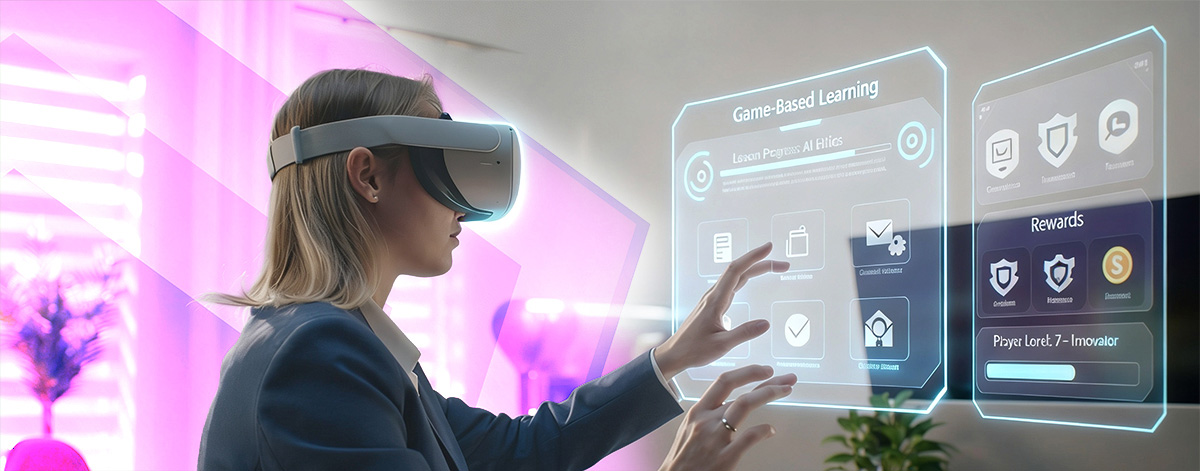
Table of contents
The corporate landscape in 2026 is defined by a paradox: Technology’s made learning more accessible than ever, yet meaningful engagement continues to decline (source: Gallup). For Learning and Development (L&D) leaders, the challenge is no longer just about providing content; it’s also about ensuring that the content actually translates into behavioral change and high-performance outcomes.
In highly competitive markets wherein the "war for talent" has shifted toward a "war for skills," traditional training models, which are typically built around static content, linear modules, and completion-based metrics, are proving insufficient to meet modern performance demands. As roles evolve faster than formal curricula and employees are expected to apply new skills in real time, content-heavy training fails to translate into on-the-job capability. Remote work, compressed attention spans, and continuous reskilling pressures have further exposed the limits of passive, one-size-fits-all learning approaches.
That’s why organizations are specifically turning to advanced gamification strategies to address the primary flaw of traditional learning—passive consumption—which becomes even more pronounced in digital and asynchronous eLearning environments.
Unlike standard modules that typically consist of slide-based instruction, linear video content, and end-of-course quizzes, gamification in learning leverages neurobiological triggers, gamification in learning leverages neurobiological triggers, specifically the dopamine-driven feedback loop (source), to transform a chore into a high-stakes challenge. By replacing static slides with active decision-making, these eLearning solutions foster intrinsic motivation to ensure that knowledge isn't just viewed but also internalized.
At Ozemio, we’ve perfected this transition, moving beyond surface-level aesthetics the mere visual appeal of badges and colorful interfaces, to implement structural gamification solutions that mirror the sophistication of modern consumer tech to directly drive the retention and capability that today’s digital-native workforce demands.
Here are the five most influential gamification trends shaping eLearning solutions this year:
- Narrative-Driven Immersive Simulations
In 2026, the corporate training industry has matured past the novelty phase of gamification. We’re seeing a significant shift toward game-based learning that utilizes complex, branching narratives. Instead of isolated quizzes, learners are placed in a continuous story arc—a mission-critical scenario that mirrors their actual job functions.
Embedding these learning objectives within a narrative creates emotional investment. When a learner’s decision impacts a virtual client’s success or a project’s budget, the stakes feel real.
For instance: A leading multinational retail corporation recently overhauled its leadership track by replacing static modules with "Business Turnaround" simulations. For example, managers were tasked with navigating a struggling virtual storefront, making real-time decisions on staffing and inventory. This narrative approach resulted in a significant increase in post-training competency scores compared to previous years.
- Adaptive Game-Based Learning Journeys
One of the primary reasons learners disengage is a lack of appropriate challenge—if the content is too simple, they become bored; if too complex, they get frustrated. Modern learners expect personalization, and adaptive game-based learning leverages AI-powered learning solution to create personalized difficulty curves that respond to each learner’s progress. These adaptive strategies employ AI and analytics to dynamically adjust content difficulty, game scenarios, and rewards based on each learner’s progress and skill profile.
For example: An international bank’s sales manager in Houston and its software engineer in Toronto can both experience tailored challenges that match their roles and learning goals, thus ensuring maximum relevance and impact.
Furthermore, Ozemio’s gamification solutions integrate data analytics to monitor learner progress in real-time. If the system detects that a learner is mastering a concept rapidly, it automatically introduces "Pro-level" challenges to facilitate the learner’s flow state. Conversely, our intuitive system provides subtle "scaffolding" for those who need more support, thereby ensuring that no one is left behind.
This personalized and adaptive gamification improves workforce completion rates that help organizations close skill gaps fast and effectively.
- High-Stakes Micro-Challenges
Attention is among the most valuable currencies in the modern workplace. Therefore, eLearning gamification solutions are pivoting toward "Micro-Challenges"—short, intense bursts of problem-solving lessons that can be completed in under five minutes but still require deliberate thinking.
These challenges are designed to fit directly into the flow of work. So, instead of long learning sessions, learners engage with targeted decision moments that reinforce critical skills without interrupting productivity. When spaced intentionally over time, this approach strengthens retention while minimizing cognitive overload.
For example: In a customer support environment, agents may receive a daily micro-challenge presenting a difficult client interaction. The learning agents must then choose the most appropriate response based on tone, policy, and customer context. Immediate feedback then explains the downstream impact of each choice, reinforcing best practices without requiring a full training session. Over time, these repeated decision moments measurably improve response quality and confidence during live interactions.
At Ozemio, micro-challenges aren’t treated as simply standalone activities because they’re sequenced strategically across learning journeys to ensure each challenge reinforces previously learned concepts while also preparing learners for more complex scenarios.
- Risk-Free Simulations (The "Failing Forward" Strategy)
In high-stakes roles, such as those in financial services, healthcare, or operational areas like manufacturing, logistics, or supply chain management, the cost of real-world mistakes can be high. That’s why one of the most effective applications of game-based learning is the creation of safe-to-fail simulation environments wherein learners can experiment, make errors, and experience consequences without organizational risk.
Thus, these safe simulations allow learners to experience cause and effect, thereby building their judgment and confidence through actual practice rather than mere theory.
For instance: In a compliance training program, learners may be placed in a simulated regulatory audit scenario where incomplete documentation or delayed responses lead to escalating consequences. Learners can revisit decisions, test alternative approaches, and observe how different actions affect outcomes. This repeated exposure builds procedural fluency and reduces error rates when similar situations arise in real operations (Source).
Ozemio designs these simulations to replicate real-world workflows and constraints, ensuring that “failure” becomes a learning accelerator rather than a setback.
- Social Gamification: Driving Peer-to-Peer Learning
The current diverse U.S. workforce craves connection, especially in remote and hybrid setups wherein isolation can hinder learning momentum. And social gamification taps into all this by infusing into learning elements like team quests, leaderboards, and collaborative challenges, thereby transforming learning into a socialized competition.
For instance, imagine rolling out a leadership program wherein teams across different regions compete in scenario-based missions, earning rewards for both effort and outcome. This not only strengthens camaraderie but also accelerates the knowledge transfer of leadership capabilities as employees learn from each other in real time.
This social gamification increases engagement and fosters a culture of continuous learning (Source).
And you can partner with Ozemio to customize eLearning gamification solutions that seamlessly integrate social features, thus promoting the healthy competition and knowledge sharing so critical for high-performance teams.
Why L&D Leaders Choose Ozemio for Gamification in Learning
The future of game-based learning is here and it’s built on personalization, collaboration, real-world relevance, agility, engagement, adaptivity, and data. That’s why Ozemio meticulously crafts its gamification strategies to address the unique challenges and profit-driven goals of leading organizations. By emphasizing collaboration, continuous feedback, and real-world relevance, these strategies help organizations better engage remote talent. At the same time, they close critical skill gaps and drive measurable business outcomes—rather than superficial completion metrics.
Ready to see your training metrics skyrocket with our custom gamification strategies?
Let Ozemio help you turn learning into your organization’s greatest competitive advantage in 2026 and beyond with our proven eLearning gamification solutions.