October 6, 2026

Stop Calling It Onboarding. Start Calling It What It Actually Is: Your First Test as an Employer.
May 21, 2026
5 Key Roles of Leaders in Change Management: Navigating the 2026 Workforce
April 1, 2026Stop Calling It Onboarding. Start Calling It What It Actually Is: Your First Test as an Employer.
May 21, 20265 Key Roles of Leaders in Change Management: Navigating the 2026 Workforce
April 1, 2026How AI Is Transforming Workforce Development in 2026 (With Real Use Cases)

The conversation around AI has moved beyond experimentation. Pilot programs, isolated tools, and cautious curiosity are giving way to something more meaningful: practical impact. In 2026, AI is helping organizations strengthen how they hire, develop, support, and retain people. Workforce readiness has become one of the defining business challenges of our time.
A State of Workplace 2026 report by Society for Human Resource Management (SHRM) reinforces that U.S. employers continue to face persistent skills shortages, growing leadership pipeline gaps, and increasing pressure to strengthen internal mobility and continuous reskilling as core workforce priorities.
The State of Organizations 2026 report by McKinsey echoes a similar theme: organizations are placing a sharper focus on performance during a time of economic shifts, technology disruption, and evolving workforce models.
Behind every strategy conversation are four urgent questions:
- What skills do we have today?
- What skills will we need next?
- Where are the gaps?
- How do we close them efficiently?
AI is helping leaders answer these questions with greater clarity, speed, and confidence.
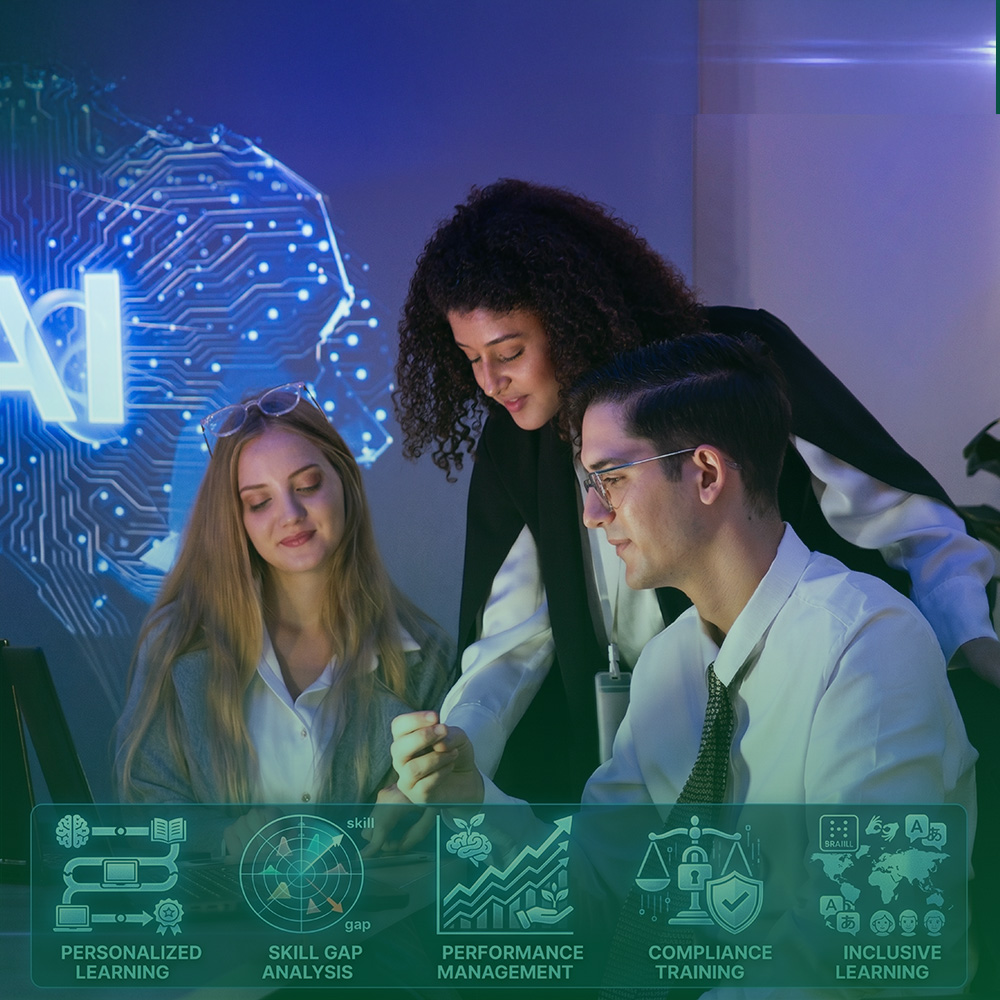
- Personalized Learning That Feels Human
AI is helping organizations move beyond one-size-fits-all training by creating learning journeys tailored to each employee’s role, skill level, performance, and career goals. Instead of static course catalogs, AI continuously recommends relevant content, adjusts learning paths, and identifies capability gaps in real time.
For example, a California-based software company recognized the need for continuous, personalized upskilling that could keep developers engaged through real-time feedback and practical application of new skills.
They partnered with Ozemio to implement AI-driven adaptive learning for engineering teams. By aligning learning journeys with technical assessments and evolving project requirements, they experienced 30% faster skill enhancement with personalized learning paths.
- Seeing Skill Gaps Before They Slow Growth
Organizations often discover workforce capability gaps only after productivity, delivery timelines, or customer experience begin to suffer. AI enables a more proactive approach by analyzing workforce data, skills assessments, and business requirements to identify capability risks early.
For instance, a telecom client faced critical talent shortages, while traditional training programs failed to address evolving skill gaps and workforce readiness needs.
Partnering with Ozemio, they utilized an AI-powered workforce assessment platform to map current workforce capabilities against future business needs. The platform’s ability to deliver real-time feedback ensures that learning is immediately relevant, driving significant improvements in performance and engagement.
- Performance Management That Supports Growth
AI is helping organizations modernize performance management by connecting goals, skills, behaviors, and progress data to create more continuous and development-focused feedback systems.
As organizations adopt skills-based workforce models, performance management is evolving from periodic evaluations to ongoing capability development.
For example, a New York-based bank wanted to improve employee engagement, knowledge retention, and workforce readiness while keeping pace with evolving regulatory requirements. To address these challenges, the bank partnered with Ozemio to implement AI-powered learning and performance solutions that personalized development journeys and streamlined training delivery across teams and achieved a 35% increase in operational efficiency.
- Compliance Training That Builds Confidence
In industries such as banking, healthcare, and manufacturing, compliance readiness and workforce readiness move together. AI helps organizations personalize training, keep content current, and improve knowledge retention.
For example, a leading New York-based bank wanted to improve compliance readiness and employee engagement amid evolving regulatory requirements. The bank partnered with Ozemio to implement an AI-powered compliance learning platform that streamlined training and personalized learning experiences across teams.
As a result, the bank reduced training time by 50% and compliance violations by 70%.
- Inclusive Learning Experiences for Every Workforce
As organizations become more distributed, workforce development must support employees across different languages, accessibility needs, and work environments. AI is helping organizations create learning ecosystems that are more flexible, scalable, and inclusive.
In one instance, the client struggled to make learning content accessible for diverse learners and non-native speakers using slow and costly traditional methods.
To solve this, the organization partnered with Ozemio to implement AI-powered accessibility solutions with automated speech-to-text, text-to-speech, and adaptive content generation capabilities and achieved 80% faster content adaptation and a 65% increase in learning accessibility across regions.
What Talent Leaders Should Prioritize Now
Technology creates the greatest value when paired with intention, trust, and thoughtful execution. Talent leaders are seeing the strongest results when they focus on:
- Aligning AI initiatives to business goals
- Connecting learning, talent, and performance systems
- Maintaining transparency in data use
- Keeping managers central to coaching and growth
- Treating reskilling as an ongoing priority
Looking Ahead
The biggest business risk in 2026 may have less to do with markets and more to do with workforce readiness.
AI is helping organizations gain real-time talent insight, personalize development, and make smarter decisions at scale. Yet the real opportunity goes deeper: creating workplaces where people grow faster, adapt confidently, and contribute at their best.
If workforce readiness is your next priority, connect with Ozemio experts and explore what future-ready transformation can look like.
Naveen is a seasoned Learning and Development professional with 19 years of experience in training delivery, L&D operations, project management, and learning consultancy. He excels in managing projects, optimizing operations, and leading cross-functional teams. He is adept at conducting needs assessments, developing solutions, and enhancing workforce performance. He is passionate about fostering continuous learning, employee growth and driving organizational success through strategic learning initiatives.