Beyond ChatGPT: How AI Microlearning Scales Personalized Growth
June 18, 2026
Skills-Based Learning in Manufacturing – A Practical Guide for L&D Teams
May 26, 2026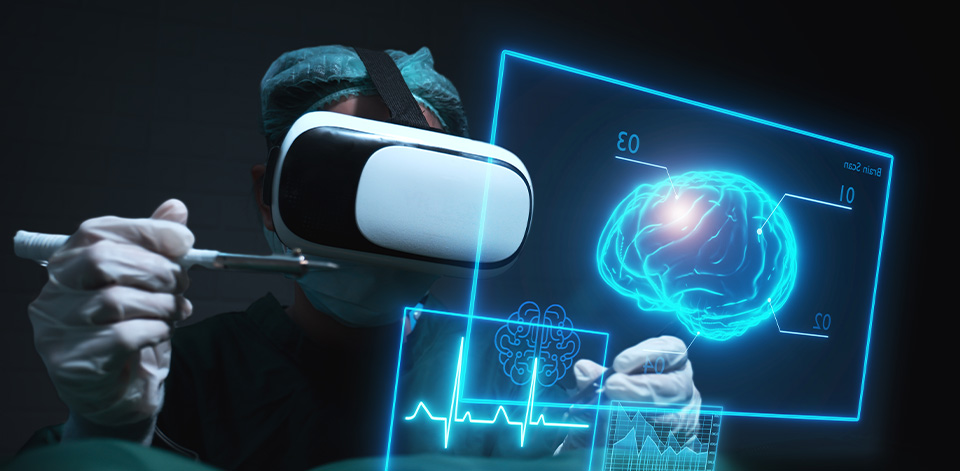
Table of contents
- What If You Could Practice Life-or-Death Decisions Without Any Real Consequences?
- What Is Simulation-Based Learning in Healthcare?
- Why Traditional Training Methods Are No Longer Enough
- The Proven Benefits of Simulation-Based Healthcare Training
- Emerging Technologies Pushing the Boundaries Further
- Implementation: What Health Systems Need to Get Right
- The Bottom Line: A Transformation Already Underway
- Other Articles
What If You Could Practice Life-or-Death Decisions Without Any Real Consequences?
Imagine a surgical resident holding a scalpel for the first time, not over a patient, but over a high-fidelity mannequin that bleeds, breathes, and responds to every incision with startling realism. Heart rate monitors beep. The "patient" goes into shock. The resident panics, recovers, and learns, all without a single life at stake.
This is simulation-based learning in healthcare. And it is already here, reshaping how doctors, nurses, paramedics, and allied health professionals are trained globally.
But how far has it come? What makes it so effective? And why are health systems investing billions in it? Read on, because what this technology can do next will surprise you.
What Is Simulation-Based Learning in Healthcare?
Simulation-based learning (SBL) is a training methodology that replicates real-world clinical scenarios in a controlled, risk-free environment. Instead of learning purely from textbooks or observing experienced clinicians, healthcare trainees actively engage, diagnose, treat, make decisions, and face the consequences of those decisions, all within a safe simulation space.
It spans a wide range of tools and formats:
- High-fidelity mannequins that mimic human physiology, which involve breathing, bleeding, and reacting to medications
- Virtual reality (VR) and augmented reality (AR) simulators for surgical procedures and diagnostics
- Standardized patient actors trained to portray symptoms and respond realistically
- Screen-based case simulations for clinical decision-making
- Procedural task trainers like IV insertion arms or laparoscopic surgery simulators
Each format serves a specific learning purpose, from mastering technical skills to navigating complex team communication during a medical emergency.
Why Traditional Training Methods Are No Longer Enough
For decades, the dominant model of healthcare training followed a simple philosophy: see one, do one, teach one. Trainees observed a senior clinician, attempted the procedure themselves, and eventually taught the next generation.
The problem? Patients bear the risk.
Studies have consistently shown that medical errors remain among the leading causes of preventable deaths globally. A significant proportion of those errors trace back to gaps in training, communication failures, or a lack of hands-on practice before encountering high-stakes situations.
Traditional clinical education also faces structural pressures: shorter hospital stays, reduced working hours for trainees, stricter ethical guidelines around patient consent, and a surging global demand for healthcare workers. There simply are not enough training opportunities within live clinical settings to produce fully competent practitioners at the speed modern health systems require.
Simulation bridges that gap – decisively.
The Proven Benefits of Simulation-Based Healthcare Training
The evidence backing simulation-based learning is robust and growing:
1. Improved Clinical Competence
Trainees who practice on simulators demonstrate measurably better technical skills and clinical judgment when they transition to real patient care. A landmark meta-analysis published in JAMA found that simulation training significantly outperformed traditional instruction across surgical, nursing, and emergency medicine disciplines.
2. Enhanced Patient Safety
When mistakes are made in simulation, the only consequence is a learning moment. Healthcare organizations that have embedded simulation into training programs report reductions in procedural complications, hospital-acquired infections, and critical care errors.
3. Team Communication and Crisis Management
Some of the most catastrophic medical events, such as cardiac arrests, mass casualty incidents, and operating theatre emergencies, are not caused by individual incompetence, but by team breakdown. Simulation recreates these exact scenarios, allowing multidisciplinary teams to practice communication, delegation, and crisis leadership together, before it counts.
4. Accelerated Competency Development
Simulation compresses the learning curve. A trainee can experience the equivalent of years of rare but critical clinical events, such as anaphylaxis, airway obstruction, and obstetric emergencies, in a structured simulation curriculum spanning months.
5. Measurable, Objective Assessment
Unlike subjective clinical evaluations, simulation environments generate data. Performance metrics, decision timelines, error rates, and response patterns can all be tracked and reviewed, giving administrators precise insight into where each learner needs further development.
Emerging Technologies Pushing the Boundaries Further
If current simulation capabilities are impressive, what is coming next is extraordinary.
Artificial Intelligence (AI)-Powered Simulation is enabling adaptive learning environments that respond in real-time to a trainee's decisions, adjusting the complexity and direction of a scenario based on individual performance. No two training sessions are identical.
Haptic Feedback Technology is making virtual surgical simulators increasingly indistinguishable from the real thing — trainees can now feel the resistance of tissue, the snap of a suture, and the vibration of a drill through specially designed gloves and instruments.
Immersive VR Training Platforms are removing geographical barriers entirely. A healthcare worker in a rural clinic in India can train on the same high-fidelity surgical simulation platform as a resident at a major teaching hospital in London.
Digital Twin Technology is creating virtual replicas of individual patients based on real health data, is on the horizon, promising a future where surgeons rehearse specific operations on a digital copy of their actual patient before entering the theatre.
Implementation: What Health Systems Need to Get Right
Despite its clear benefits, simulation-based learning is not without challenges. The upfront investment in infrastructure, equipment, and trained facilitators is substantial. Health systems must also resist the temptation to treat simulation as a standalone solution rather than an integrated part of a broader training continuum.
The most successful programs share three key features: strong institutional commitment, faculty who are skilled simulation educators (not just clinical experts), and a culture of psychological safety, where learners feel genuinely free to make mistakes, reflect honestly, and improve without fear of judgment.
Debriefing, the structured conversation that follows every simulation session, is arguably the most important component of the entire process. Without expert-led reflection on what happened and why, the learning value of even the most sophisticated simulation drops dramatically.
The Bottom Line: A Transformation Already Underway
Simulation-based learning is not a supplementary add-on to healthcare education. It is becoming the backbone of how competent, confident, and safe healthcare professionals are built.
As technology advances and evidence mounts, the question for health systems is no longer whether to invest in simulation, but how fast they can scale it.
The stakes, after all, could not be higher. And in healthcare, the best time to make mistakes is before they ever matter.