Global Industrial Technology Leader Cuts Unscheduled Downtime by 35% With AI-Driven Maintenance Training
August 13, 2026
Global Life Sciences Leader Drives 75% Voluntary Adoption of a Leadership Framework with Zero Performance Scores
September 24, 2026From Skill Gaps to Standardized Practice: How Ozemio Built Gas Turbine Training for an Energy Sector Leader
Category:
Competencies and Skill Development
Industry:
Oil and Energy
At a Glance
- 1 training model: Deployed across the client's entire network of field facilities, spanning 1,480 kilometers
- 4-pillar curriculum: Technical proficiency, regulatory compliance, operational efficiency, problem-solving
- 3 blended delivery formats: Self-paced eLearning, instructor-led sessions, hands-on practice
- Certification-backed readiness: For independent turbine maintenance
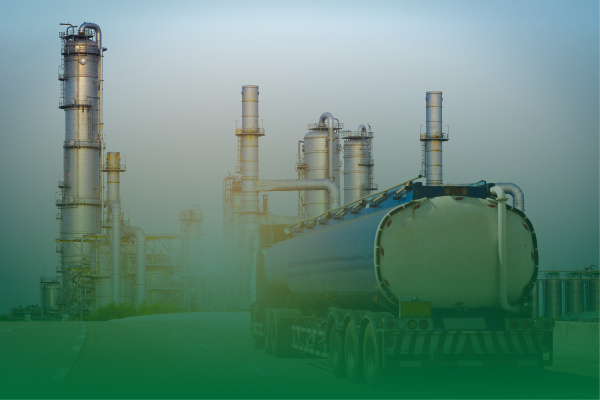
An aging workforce nearing retirement and inconsistent maintenance practice across sites pushed a national energy sector operator to replace historical knowledge with a standardized, certification-backed training program. It now runs as the operator's benchmark for scalable technical training.
The Challenge
Gas turbines sit at the center of any energy transmission system. When one goes down, the disruption doesn't stay local.
Keeping them running had always rested on a small group of experienced technicians who learned the equipment hands-on, over years, and many of them were approaching retirement.
- A retiring knowledge base
Institutional expertise built over decades doesn't transfer through a handover memo, and the incoming workforce had aptitude but no structured grounding to build on.
2. Inconsistent maintenance across sites
Procedures varied from one location to the next, and that inconsistency was already producing turbine failures and unplanned downtime.
3. A training model that couldn't scale
Classroom sessions and manuals were expensive to run across a dispersed, multi-site workforce and weren't built to reach every technician without heavy travel costs.
4. Fast-evolving turbine technology
Newer models and updated maintenance techniques meant any new training had to hold up against equipment still coming into the field, not just what was already there.
Ozemio's Approach
Ozemio built the Basic Gas Turbine Construction and Maintenance Training Program as a web-based course, structured around a competency model rather than a static content library.
Structuring the Learning Journey
- Four-pillar design: Technical proficiency, regulatory and safety compliance, operational efficiency, and problem-solving, each built into its own module with defined learning objectives
- Guided navigation: A narrator introduces every module, followed by a prerequisite assessment that flags which topics a learner should focus on before continuing
- Knowledge checks throughout: MCQ assessments after every section give learners real-time feedback, closing with a reflection and summary exercise
Making Dense Technical Content Learnable
- Visual and interactive learning: Animated walkthroughs, clickable turbine models, and infographics break down construction and maintenance steps that are difficult to explain through text alone
- Microlearning structure: Content is broken into short, modular sections designed to prevent cognitive overload on a genuinely technical subject
- Range-aware design: Built to serve experienced engineers needing an upskilling refresh and newer technicians building foundational knowledge, without slowing either one down
Delivering Where the Workforce Works
- Self-paced eLearning on the operator's own learning management system, for flexibility around shift schedules
- Instructor-led virtual sessions giving technicians direct access to subject matter experts and real case discussion
- Hands-on training at designated centers, giving technicians supervised practice on live turbine components
- Performance-based assessment and certification, validating readiness for independent maintenance work on completion
Implementation: Rolled Out in Phases
Leadership endorsed the program early and reinforced it through consistent communication. A pilot phase ran first, gathering feedback that shaped the content before a wider rollout.
The program then moved out in phases across job functions and locations, with manager evaluations and skill assessments feeding ongoing improvements back into the program after launch.
The Impact: From Inconsistent Practice to One Certified Standard
Post-training assessments confirmed reduced maintenance errors and less downtime across the network; the two outcomes the program was built to deliver.
Every technician, regardless of site, now works from the same four-pillar curriculum and the same certification standard, replacing what had been station-by-station variation in practice.
- Reduced maintenance errors, confirmed through post-training assessment
- Reduced downtime, driven by improved troubleshooting and proactive maintenance skills
- Faster onboarding for new hires, through structured, competency-based learning
- Lower turnover, as technicians felt more invested through structured skill-building
- One standardized curriculum and certification standard, replacing site-by-site variation
Why It Worked?
- Competency-based: Structuring the program around four measurable pillars gave both the operator and the learner a clear standard to work toward, not just a stack of material to get through.
- Guided, not just self-serve: The narrator and prerequisite assessment gave self-paced learners a built-in sense of direction instead of leaving them to navigate dense technical content alone.
- Blended delivery matched to a dispersed workforce: Combining self-paced, instructor-led, and hands-on formats meant the program reached technicians however they worked, not however was easiest to build.
- Change management built into the rollout: Leadership endorsement, a pilot phase, and phased deployment gave the program room to be refined before it reached the full workforce.
Looking to close a critical skills gap? Let's build a training program that scales as far as your operations do.
Other Case Studies
- Date
- August 5, 2026