Immersive Learning in Healthcare: Better Training for Clinical Teams
May 20, 2026
The Evolution of Learning and Development in Manufacturing: Preparing the Workforce for Industry 5.0
April 8, 2026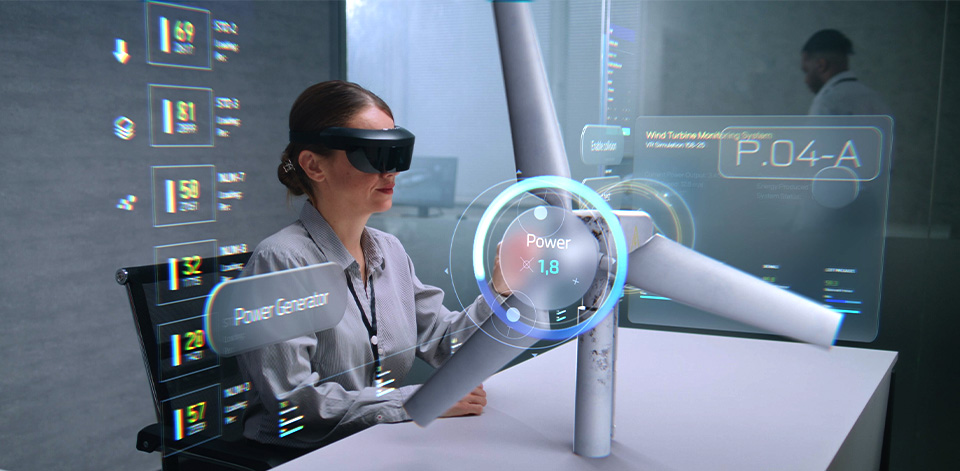
Table of contents
A Practical Perspective for Industry Leaders
The New Reality: Skills Needed to Keep Pace with Change
The U.S. manufacturing sector is entering a critical phase. According to industry projections, millions of roles may remain unfilled over the next decade due to widening skill gaps, retirements, and evolving job requirements. At the same time, manufacturers are:
- Accelerating automation and digital transformation
- Reshoring operations to strengthen supply chains
- Managing stricter safety, compliance, and quality standards
A Deloitte report highlights that nearly 80% of US manufacturers are actively transforming operations. This creates a clear mandate: build skills faster, without slowing production or increasing risk.
Leading organizations are responding by repositioning learning as a driver of performance. Immersive learning is emerging as a key enabler in this shift.
What Immersive Learning Delivers
Immersive learning combines simulation, interactive scenarios, and technologies such as Augmented Reality (AR) and Virtual Reality (VR) to create environments where employees actively engage with tasks. Learners build a deeper understanding by reflecting on real job demands, strengthening confidence, consistency, and readiness over time.
Recent insights show immersive learning delivers:
- Up to 76% improvement in learning effectiveness
- Learner training completed up to 4x faster in immersive environments
- Simulations that improve retention, performance, and real-world application
For U.S. manufacturers facing productivity and labor constraints, this translates directly into faster workforce readiness.
Where Immersive Learning Delivers Immediate Impact
- Accelerating Skill Development
Advanced equipment and automated systems require precise handling. Immersive simulations allow workers to learn through repetition without disrupting production.
Impact:
- Faster time to competency
- Reduced training-related downtime
- Improved operational consistency
This positions learning as a contributor to business performance, not only a support function.
- Strengthening Safety in High-Risk Environments
Safety remains a top concern in U.S. manufacturing, with strict regulatory oversight from the Occupational Safety and Health Administration(OSHA). Immersive learning enables workers to experience hazardous scenarios safely, including, equipment failures, emergency responses, and environmental risks.
Impact:
- Improved compliance
- Better decision making under pressure
- Reduced workplace incidents
- Scaling Workforce Onboarding
With reshoring and expansion, many U.S. manufacturers need to onboard talent quickly across multiple locations. Immersive learning provides:
- Standardized training experiences
- Reduced dependence on instructor availability
- Scalable onboarding across facilities
Impact: Faster ramp-up for new hires and more consistent skill development.
- Improving Engagement and Retention
Manufacturing roles often require precision and repeatability. Immersive learning reinforces these through active participation.
Impact:
- Higher engagement
- Better knowledge retention
- Stronger skill application on the job
- Driving Measurable Performance Gains
Manufacturers increasingly expect learning investments to deliver operational value. Immersive learning supports this by tracking performance data, identifying skill gaps in real time, and linking training outcomes to productivity metrics
Impact:
- Reduced errors and rework
- Improved throughput
- Stronger audit and compliance outcomes
Insights from Ozemio’s Work in Industrial Learning
Organizations across manufacturing and industrial sectors have already begun to realize these benefits through structured immersive learning initiatives.
- Building Capability in Food Processing
A global food processing company partnered with Ozemio to strengthen industrial capability by up to 40% across its workforce.
The focus was on simplifying complex processes through simulation-based learning. Teams were able to engage with workflows in a practical, repeatable way, leading to a stronger understanding and improved execution on the ground.
2. Enhancing Onboarding in Mining Operations
In mining environments, onboarding plays a critical role in ensuring safety and readiness. Ozemio designed immersive onboarding experiences that helped new hires understand site conditions, equipment usage, and safety expectations before entering live environments.
This resulted in 60% faster onboarding cycles, greater confidence among new employees, and improved preparedness for high-risk roles.
3. Driving Efficiency Improvements
In another industrial engagement, immersive learning interventions were aligned with operational performance goals. The outcome included efficiency gains of up to 40%, supported by better skill application, reduced variability in task execution, and improved workforce consistency
4. Strengthening Workforce Preparedness
Ozemio assisted the client in increasing the competency of their workforce by upskilling them through tailored and engaging learning solutions to build resilience.
Employees were exposed to critical situations that required judgment, coordination, and quick decision making. This helped teams respond more effectively in real-world conditions and strengthened overall workforce readiness.
What’s Next for U.S. Manufacturing Learning
As manufacturing continues to evolve, learning strategies are expected to become more integrated with operations. Immersive learning continues to evolve, combined with Industry 4.0 initiatives. Key developments include:
- Digital twins for real-time training aligned with actual operations
- AI-driven personalization to adapt learning paths
- Continuous learning models embedded into daily workflows
These advancements support a shift toward agile, data-driven workforce development.
Where to Start
For manufacturers evaluating immersive learning, early success often comes from focusing on high-impact areas:
- Roles with safety or operational risk
- Complex processes requiring hands-on practice
- Functions with long onboarding cycles
Pilot programs in these areas can demonstrate value quickly and guide broader implementation.
Closing Perspective
Upskilling in manufacturing is becoming more closely tied to how effectively organizations can translate learning into performance.
Immersive learning offers a pathway to achieve this by aligning training with real-world application, enabling faster capability building, and supporting safer, more consistent operations.
With experienced partners like Ozemio, manufacturers can create learning ecosystems that support both immediate needs and long-term workforce transformation.
Explore how immersive learning can accelerate your workforce performance, at scale. Connect with Ozemio experts today.